



The USD to NGN black market rate sits between N1,410 and N1,430 per dollar as of November 9 to 10, 2026, according to data from Abokifx and parallel market operators across Lagos, Kano, and Onitsha. The official NFEM rate stands at N1,346.79, meaning the gap has widened to roughly N63 to N83 per dollar, or about 4.7% to 6.2%. For importers pricing a container, that spread is the difference between profit and loss.
According to a report by BusinessDay on Monday, November 9, 2026, data collated from parallel market operators showed the naira depreciated to between N1,410 and N1,430 per dollar. Abokifx, one of the most widely tracked rate aggregators, listed a buy rate of N1,413.16 and a sell rate of N1,422.92 on November 10. The CBN’s official Nigerian Foreign Exchange Market (NFEM) rate closed at N1,346.79 on Friday, November 6, and remained frozen over the weekend since the official window does not trade on non-business days.
Headline Hubs has been tracking the widening gap between official and street rates, and the numbers tell a story that matters directly to any business that sources dollars outside the banking system. The rate you see on your street in Lagos, Kano, or Onitsha is not a number the CBN sets. It is the product of real-time supply and demand among independent currency dealers, and understanding how those dealers arrive at their prices is the first step to getting a fair quote.
What the Black Market Dollar Rate Is Today
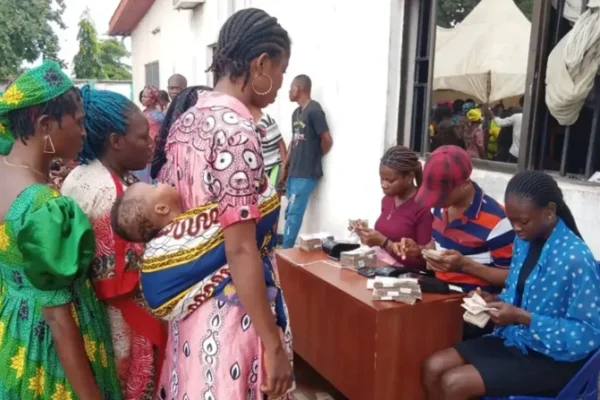
As of November 9 to 10, 2026, BDC operators across Nigeria are quoting the dollar at N1,410 to N1,430 to sell and N1,390 to N1,415 to buy. The sell rate is what you pay when purchasing dollars for imports, school fees, or travel. The buy rate is what a dealer pays you when you bring dollars to sell. The gap between the two, typically N5 to N20 per dollar, is the dealer’s margin.
Multiple trackers show slightly different figures for the same day, and that is not an error. It reflects the reality that the parallel market is not a single exchange with one clearing price. Abokifx listed a sell rate of N1,422.92 on November 10, while NgnRates reported an average sell rate of N1,430 based on user-submitted quotes from Lagos. NaijaTransfer quoted N1,410 to sell and N1,430 to buy on November 9. Within Nigeria reported dealer quotes ranging from N1,390 to N1,415 on the same day, with some trackers showing the buying rate as high as N1,428.
Why the range? A dealer in Lagos Island may quote a different price from one in Kano’s Wapa market or Onitsha’s main market on the same day. Rates also shift between morning and evening. A dealer who quotes N1,410 at 9 a.m. may move to N1,425 by 4 p.m. if demand surges. The rate you see on a website is a snapshot from a sample of dealers at one point in time, not a price anyone is obligated to offer you.
For context, the official NFEM rate has held remarkably steady. According to CBN data published through NFEM, the rate moved from N1,347.94 on November 2 to N1,346.79 on November 6, a range of barely N2 over the week. The parallel market moved N40 or more in the same period. The official window is calm. The street is volatile. That contrast is where the story lives.
How BDC Operators Actually Set the Daily Rate
BDC operators do not wait for a CBN directive to set their rates. They price dollars based on what they paid to acquire them, what competitors are charging, and how much buyer pressure they face at any given moment. The process is decentralized, fast, and deeply local.
The Morning Opening Bid
According to analysis by The Cowrie Report, the parallel market has no single clearing mechanism. Early in the trading day, large dealers who hold dollar positions, often individuals with access to international accounts or businesses that retain FX from export proceeds, set an opening bid. Smaller street traders shadow these rates with a small spread. If a major dealer in Lagos Island opens at N1,410 to sell, a smaller operator in Allen Avenue may quote N1,415 to account for lower volume and higher overhead per transaction.
Supply and Demand on the Street
The single biggest factor is raw supply and demand. If more people walk in to buy dollars than to sell, rates rise. If sellers outnumber buyers, rates drop. This is why the market moves frequently and sometimes sharply within a single day.
BDC operator Umar Cindo explained the dynamics to Nairametrics: “The increasing disparity between the exchange rate at the official market and the black market is fundamentally a problem of supply, access, and confidence. In recent times, the official window has struggled to meet the volume of dollar demand in the economy. Importers, small and medium-scale businesses, parents paying school fees abroad, medical travelers, and even some corporate entities often find it difficult to access foreign exchange through the banks. When legitimate demand cannot be satisfied at the official rate, people naturally turn to the parallel market, where transactions are faster and more flexible. This shift increases pressure on the black market and pushes its rate further away from the official rate.”
Location: Lagos, Kano, and Onitsha
Rates are not uniform across Nigeria. Each city has its own supply dynamics, and understanding them helps you know whether the quote you receive is competitive.
In Lagos, the BDC clusters around Allen Avenue in Ikeja and Apongbon on Lagos Island handle the highest trading volumes in the country. Because volume is deep, spreads tend to be tighter and rates more competitive. Lagos is also where large corporate and import-driven demand concentrates, which means rates here often move first and other cities follow. The city’s commercial pulse, which we track in our Lagos business and economic updates, directly feeds the dollar appetite on the street.
In Kano, the Sabon Gari and Wapa market clusters have historically offered the cheapest dollars in Nigeria. Kano serves as a gateway for trade with Niger Republic and other Sahel countries, and the dollar supply there includes cross-border flows that do not pass through Lagos. A Kano dealer may quote N5 to N10 below a Lagos dealer on the same day because the local supply-demand balance is different.
In Onitsha, the main market BDC corridor serves one of the largest concentrations of importers in West Africa. Traders bringing containers of electronics, textiles, and household goods through the port in Lagos need dollars to settle suppliers in China, Dubai, and Vietnam. According to Abokifx’s BDC dealer directory, licensed operators such as Winners BDC on 1 Bida Road in the main market and Jag BDC on the Onitsha-Enugu Expressway serve this corridor. Demand in Onitsha spikes sharply around import cycles, and rates there can run above Lagos during peak restocking periods.
Negotiation and Volume
Unlike bank transactions, BDC rates are negotiable. The final rate you get depends on the amount you are exchanging, your relationship with the trader, and current market pressure. Larger amounts sometimes attract slightly better rates because the dealer earns more total margin even at a lower per-dollar price. A trader who knows you as a repeat customer may hold a rate for you that a walk-in customer would not get.
The condition of your dollar bills also matters. Crisp, unfolded, post-2009 dollar bills consistently fetch N5 to N20 more per dollar than worn or pre-2006 notes, as Abokifx notes in its rate guidance. Dealers discount damaged or older series because they are harder to move to the next buyer.
Why the Parallel Market Keeps Diverging From the Official Window
The gap between the official NFEM rate and the parallel market rate has widened from about N30 per dollar in early November to over N80 per dollar by November 10. This is not a random fluctuation. It reflects structural factors that keep the two markets from converging, even after the CBN’s June 2023 decision to float the naira and unify multiple exchange windows.
Demand That the Official Window Cannot Absorb
The NFEM window allocates dollars primarily for priority transactions: import duties, fuel purchases, and some corporate transfers. For everyone else, including importers of consumer goods, small businesses, parents paying school fees, and medical travelers, the BDC is the only realistic option. When legitimate demand cannot be met through banks, it spills into the parallel market, pushing the street rate higher.
Speculation and Dollar Hoarding
Forex trader Basir Kanjiwa told Nairametrics: “Demand for foreign exchange remains structurally high while supply is constrained. Many market participants hold on to dollars in anticipation of further depreciation, which tightens liquidity.” When holders expect the naira to weaken, they keep their dollars off the market, reducing supply and pushing the street rate up even without a fresh surge in demand.
Fiscal Leakages and Ungoverned FX Channels
Aminu Gwadebe, President of the Association of Bureau De Change Operators of Nigeria (ABCON), put it bluntly to Nairametrics: “The over-appreciation of the naira is encouraging the creation of many ungoverned FX channels that are used as a conduit for the diversion of FX liquidity into the economy. Speculation and arbitrage activity in the parallel market far outpace optimism in the official market. As long as there is fiscal leakages, the parallel market will continue to drive exchange rate movement.”
Gwadebe’s point is that when the official rate does not reflect the true supply-demand balance, arbitrageurs exploit the gap. Dollars bought cheaply through official channels can be resold at the street rate for a profit, which drains liquidity from the formal system and feeds the parallel market. The wider the gap, the stronger the incentive to divert dollars.
The CBN’s Position
CBN Governor Olayemi Cardoso, speaking during an investor engagement in Bangkok as reported by BusinessDay on November 9, 2026, said the gap between the official and parallel exchange rates had narrowed significantly to less than two percent from about 60 percent. That claim refers to the gap at its narrowest point earlier in the year. By the week of November 9, the gap had widened again to 5.13%, according to BusinessDay’s own data, showing how quickly the premium can expand when demand pressure returns.
On February 11, 2026, the CBN re-admitted licensed BDCs to the NFEM at a $150,000-per-week purchase cap, a move intended to narrow the spread by giving BDCs a legitimate supply channel. The partial reintegration helped temporarily, but the cap is small relative to total retail demand, and BDCs still rely heavily on autonomous sources such as diaspora remittances and private inflows, which are inconsistent.
How the Gap Widened This Week
| Date (Nov 2026) | NFEM Official (N/$) | Parallel Sell Range (N/$) | Gap (N) | Premium |
|---|---|---|---|---|
| Nov 2 | 1,347.94 | 1,380 to 1,390 | 32 to 42 | 2.4% to 3.1% |
| Nov 4 | 1,347.80 | 1,378 to 1,390 | 30 to 42 | 2.2% to 3.1% |
| Nov 5 | 1,348.74 | 1,390 to 1,400 | 41 to 51 | 3.0% to 3.8% |
| Nov 6 | 1,346.79 | 1,390 to 1,415 | 43 to 68 | 3.2% to 5.1% |
| Nov 9 | 1,346.79 | 1,410 to 1,430 | 63 to 83 | 4.7% to 6.2% |
| Nov 10 | 1,346.79 | 1,410 to 1,423 | 63 to 76 | 4.7% to 5.7% |
Sources: CBN/NFEM official data via Within Nigeria and NaijaTransfer; parallel market data from Abokifx, NgnRates, and BusinessDay. NFEM rate on November 9 to 10 reflects Friday’s close since the official window does not trade on weekends.
The International Monetary Fund, in its May 7, 2026 report titled “Nigeria’s Shift to a Floating Regime,” explained that Nigeria’s parallel market historically reflected the marginal cost of obtaining foreign exchange when restrictions and rationing affected access to official supply. In other words, the street rate is not an aberration. It is the true market-clearing price when the official channel cannot serve everyone who needs dollars.
For businesses, the practical impact is significant. As The Business Times reported on November 5, 2026, an importer requiring $100,000 would pay N134.6 million at the official rate of N1,346 but N140 million at the street rate of N1,400, a difference of N5.4 million before shipping, insurance, and customs duties. At the current street rate of N1,430, that same $100,000 costs N143 million, widening the gap to N8.4 million. These numbers connect directly to the broader cost-of-living pressures we have documented, including the rising fuel prices that Atiku Abubakar flagged in comparison with other oil-producing nations.
Where to Check Reliable Rates Daily
No single source gives you the definitive black market rate, because there is no single rate. But a combination of trackers, financial publications, and direct dealer contact will get you close enough to know whether the quote you receive is in the normal range.
Rate Aggregator Websites
Abokifx remains the most widely referenced aggregator. It publishes buy and sell rates daily, sourced from BDC operators across Lagos, Abuja, and Port Harcourt. NgnRates calculates averages from user-submitted comments and provides a 30-day chart showing the trend. NaijaTransfer aggregates publicly reported BDC quotes and refreshes hourly. None of these sites should be treated as a dealing rate. They are reference points to judge whether a dealer’s offer is reasonable.
Financial Publications
BusinessDay publishes daily parallel market figures sourced from its own network of BDC operators, and its reporting tends to capture the range rather than a single number, which is more useful for planning. Reuters reports African currency markets daily and includes Nigerian parallel market quotes. These publications attribute their figures to named sources and are more transparent about methodology than most aggregator sites.
How to Verify the Rate Yourself
The most reliable method is also the simplest: phone two or three licensed BDC operators in your city before you transact. Ask for both buy and sell prices, confirm whether the rate depends on note denomination or series, and compare what you hear to the aggregator data. If a dealer’s quote is N30 above what every tracker shows, ask why. It may be a genuine local supply squeeze, or it may be that the dealer is testing how much you know.
For official rates, the CBN publishes the NFEM rate daily at cbn.gov.ng. The NFEM rate is a volume-weighted average of the day’s interbank trades, not a single transaction price. Understanding this distinction matters: the official rate is an aggregate benchmark, while the street rate is a retail quote. Comparing them directly without accounting for that difference leads to misleading conclusions, as FXNews.ai demonstrated in its November 8 analysis showing that the apparent premium ranges from 2% to 5.7% depending on which source, timestamp, and quote type you use.
For businesses tracking how macroeconomic policy shapes these dynamics, our coverage of Tinubu’s reform agenda and the path to 2027 provides broader context on the fiscal and monetary decisions driving exchange rate movements.
Frequently Asked Questions
For quick reference, here are the questions importers and business owners ask most about the USD to NGN black market rate.
Frequently Asked Questions
What is the USD to NGN black market rate today?
As of November 9 to 10, 2026, BDC operators are selling dollars between N1,410 and N1,430 per dollar, with Abokifx quoting a sell rate of N1,422.92 on November 10. The official NFEM rate stands at N1,346.79, making the gap roughly N63 to N83 per dollar.
How do BDC operators set the daily dollar rate?
BDC operators set rates based on street-level supply and demand, not CBN directives. Large dealers who hold dollar positions open the morning with a bid price, smaller traders shadow that rate with a spread, and rates adjust throughout the day as buyer pressure rises or falls. Factors include dollar availability, transaction volume, customer relationships, and the condition of the dollar bills being exchanged.
Why is the black market rate higher than the official NFEM rate?
The gap persists because official dollar supply through banks cannot meet total demand. Importers, parents paying school fees, medical travelers, and small businesses who cannot access sufficient dollars through formal channels turn to the parallel market, pushing its rate higher. Speculation, where holders wait for further naira depreciation, also tightens dollar supply on the street.
Where can I check reliable black market rates daily?
Abokifx, NgnRates, and NairaBlackMarket publish daily rates aggregated from BDC operators. BusinessDay and Reuters also report parallel market figures. However, these are indicative rates. The only reliable figure is the one a dealer offers before you transact. Always confirm with two or three licensed BDC operators in your city.
Is buying dollars from BDC operators legal?
Buying foreign currency from a CBN-licensed Bureau de Change is legal. BDCs operate under the CBN’s Revised Regulatory and Supervisory Guidelines. Trading with unlicensed street dealers is not covered by that regulatory framework. Always ask whether your dealer is ABCON-registered and keep your receipt.

All rights reserved. This article and other digital content published on Headline Hubs may not be reproduced, republished, broadcast, rewritten, or redistributed, in whole or in part, without prior written permission from Headline Hubs.
Contact: support@headlinehubs.com.ng
Discover more from Headline Hub
Subscribe to get the latest posts sent to your email.