


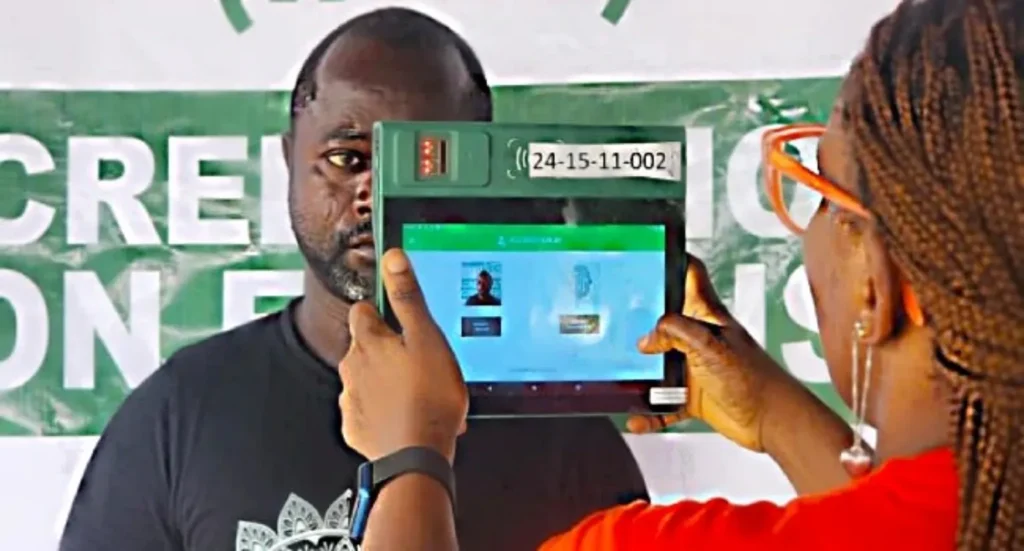


Yiaga Africa has raised concerns over technical failures, delayed deployment of election officials and discrepancies in electoral data following the Independent National Electoral Commission’s (INEC) nationwide mock accreditation and results-upload exercise held on Saturday, November 28, 2026, ahead of the 2027 general election.
The election observer group said the exercise exposed operational and technological weaknesses that require urgent attention, although the Bimodal Voter Accreditation System (BVAS) functioned effectively in most of the polling units monitored by its observers.
In its preliminary findings, Yiaga Africa said it observed 300 polling units across the country using its Process and Results Verification for Transparency methodology. The organisation had deployed 347 trained citizen observers and 60 data clerks for the exercise, with its Election Results Analysis Dashboard also used to monitor results uploaded to INEC’s Result Viewing Portal (IReV).
One of the concerns highlighted was the late arrival of election officials and materials at several locations. Yiaga Africa reported that only 36 per cent of the polling units observed had commenced the exercise by 9:30 a.m. The figure rose to 64 per cent by 10 a.m., despite the scheduled start time of 8:30 a.m.
The group cited Fadan Karshi I in Sanga Local Government Area of Kaduna State, where INEC officials reportedly arrived at 1:40 p.m. It also reported that officials had not arrived at Wanikde Playground in Yala Local Government Area of Cross River State as of 1:30 p.m. At Effraya International Market Polling Unit in Etung Local Government Area, Cross River State, officials reportedly arrived without voting materials, leaving voters waiting.
Yiaga Africa also documented problems involving BVAS devices. It said voter processing took between one and two minutes in 68 per cent of the polling units observed, while 27 per cent recorded processing times of between three and five minutes. However, a malfunctioning device at Gumbi/Wajake Yar Abba in Wamakko Local Government Area of Sokoto State reportedly halted accreditation for about one hour before the process resumed after officials changed the device’s SIM card from MTN to Airtel.
Data inconsistencies on INEC’s platforms also featured prominently in the organisation’s findings. Yiaga Africa said INEC’s official figure of 177,299 polling units differed from the 176,846 listed on the IReV portal, leaving a discrepancy of 453 polling units.
The organisation further said the IReV backend was configured for 8,791 Registration Areas instead of the 8,838 designated for the mock exercise, representing a shortfall of 47 Registration Areas. It warned that such gaps could affect the receipt and publication of results from areas missing from the platform’s configuration and urged INEC to reconcile its datasets before the 2027 elections.
Concerns were also raised over the procedures used to transmit results. Yiaga Africa cited an incident in Tsanyawa Local Government Area of Kano State, where a presiding officer reportedly declined to scan and upload polling-unit results at the polling unit and instead directed observers to the INEC office.
The group said some presiding officers also relied on personal mobile phone hotspots to connect BVAS devices and transmit accreditation information and results. It warned that the practice raised questions about the security of sensitive election data and the adequacy of connectivity arrangements provided by the commission.
Yiaga Africa additionally reported allegations of vote-buying and interference during the mock exercise. Its observers reported the distribution of ₦3,000 to voters in Ibeno Ward, Akwa Ibom State, and at Akwanga Central School. In Ibeno, an alleged attempt to influence a presiding officer to inflate figures was reportedly rejected. In Iwere-Ile, Oyo State, an individual was reportedly arrested after disrupting the exercise by tearing a ballot paper at Market Square Polling Unit.
Despite the reported problems, the organisation acknowledged that INEC had introduced additional safeguards into BVAS to improve the integrity and quality of scanned polling-unit result sheets. However, it said some safeguards prevented devices from scanning and uploading result sheets when discrepancies were detected between the documents and the device configurations. Yiaga Africa said the safeguards should be thoroughly tested to ensure they do not obstruct the timely upload of legitimate results.
The organisation recommended stronger technical support for BVAS devices, reliable connectivity, improved training and supervision of election officials, and better public sensitisation to encourage voter participation. It also called on INEC to introduce system-level controls on IReV to prevent polling-unit results from being uploaded before the stipulated 2:30 p.m. threshold in the election guidelines.
The mock exercise was organised as part of INEC’s preparations for the 2027 general election and was intended to test the commission’s accreditation and electronic results-management systems before the main polls. The findings are preliminary, and Yiaga Africa said it would continue its assessment and publish a more comprehensive report.
INEC has previously said the mock exercise was designed to identify technical gaps before the general election. The commission introduced an electronic version of the polling-unit result sheet, known as EEC8A, to check entries against accreditation figures and the physical Form EC8A before allowing results to be uploaded. Premium Times reported on the new electronic checks ahead of the exercise.
Yiaga Africa’s preliminary observations have placed renewed focus on the readiness of election technology, the accuracy of INEC’s digital records and the capacity of polling officials to manage technical problems. The commission now faces calls to address the identified gaps well ahead of the 2027 general election.
Sources: Yiaga Africa; Channels Television; Premium Times.